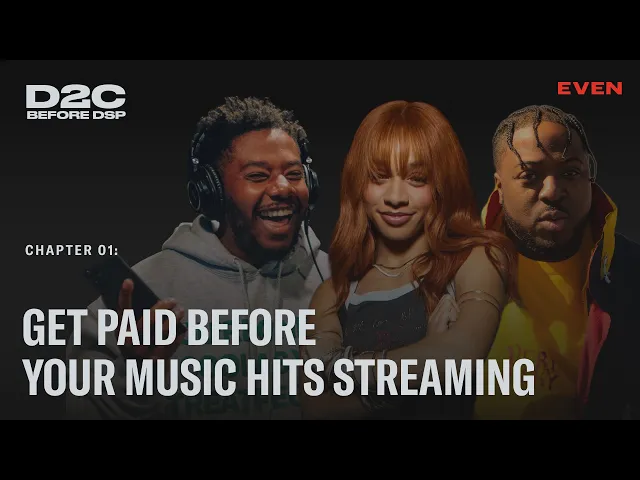
60 Monthly Listeners. $2,300 on One Release. Here’s How.
How artists at every level are making real money by selling direct to fans before streaming.
An artist with 60 monthly listeners just made $2,300 on their first release. Another artist who makes $9 a year from streaming made $400 in a single week. And yes, we work with artists like J. Cole, Chance the Rapper, and Wale, but the model works for artists at any level.
Here’s exactly how it works.
The strategy is simple
Before you release on streaming platforms, you open up a window. That window can be a week, two weeks, a month, even longer. During that window, fans can only listen to your music if they buy it directly from you.
You get paid daily. You own all of your fan data. And the best part: you own the relationship with your fans.
Everything else stays the same. Same distributor, same platforms. You’re just extending your rollout and treating it as two different opportunities to engage with your audience.
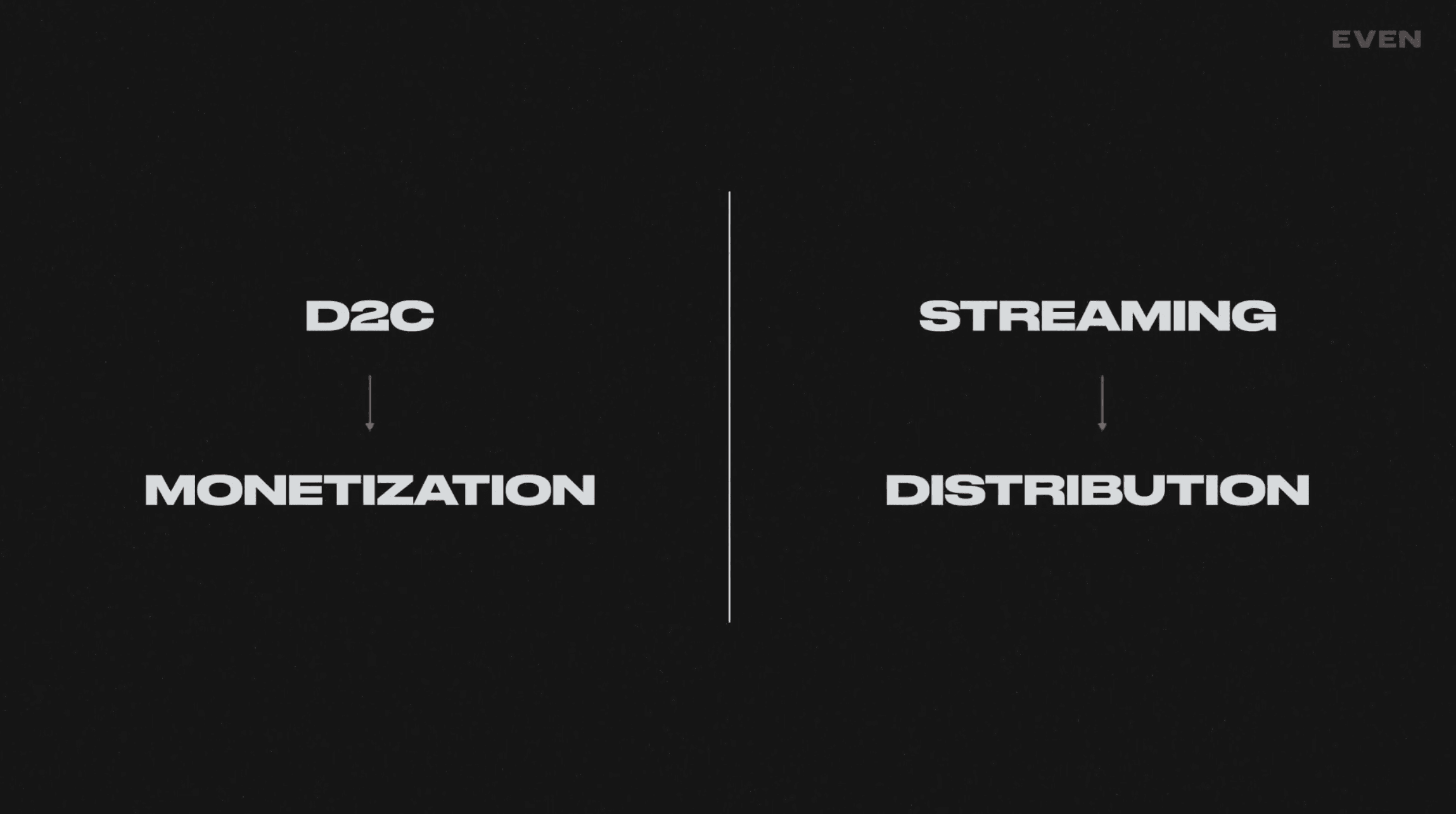
This isn’t direct-to-consumer or streaming. It’s direct-to-consumer and streaming. Direct-to-consumer is about monetization. Streaming is about distribution. They work together.
“What if I don’t have a big enough audience?”
This is the most common thing I hear from artists when I tell them about this strategy. And social media already removed that barrier for you.
All you need is 10, 20, 100 people buying your release for $20 each. That’s real revenue from your music. Start with your community first. Your friends, your family, the people around you, the people that know you, and the people that want to support you.
You’re going to send them your streaming links anyway. Give them the opportunity to buy directly from you before they get it anywhere else.
And here’s something we’ve learned from watching this play out across thousands of releases: if you set a minimum price and let people pay above it, 43% of fans will pay more than the minimum. You just have to give them the chance.
The proof is in the numbers
This is a proven model. Here are real results from real artists.
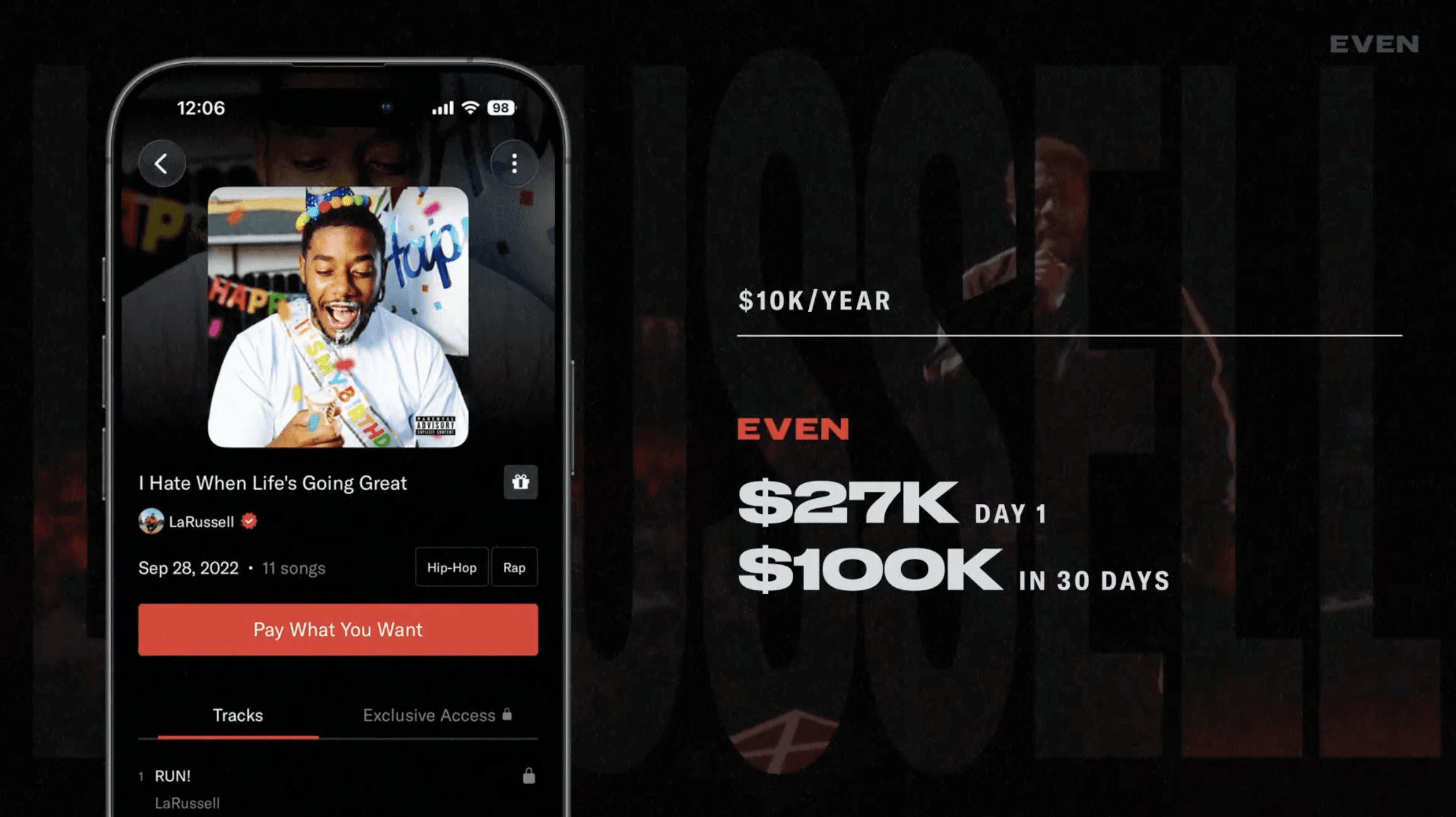
LaRussell was one of the first artists on EVEN. When he joined, he was making about $10,000 a year from streaming. He made $27,000 his first day on the platform. He went on to make over $100,000 in his first 30 days. This was LaRussell before the LaRussell you know today, but this direct-to-consumer before streaming strategy has become the foundation of how he releases everything, whether it’s tickets, merchandise, or experiences.
But you don’t have to be LaRussell.
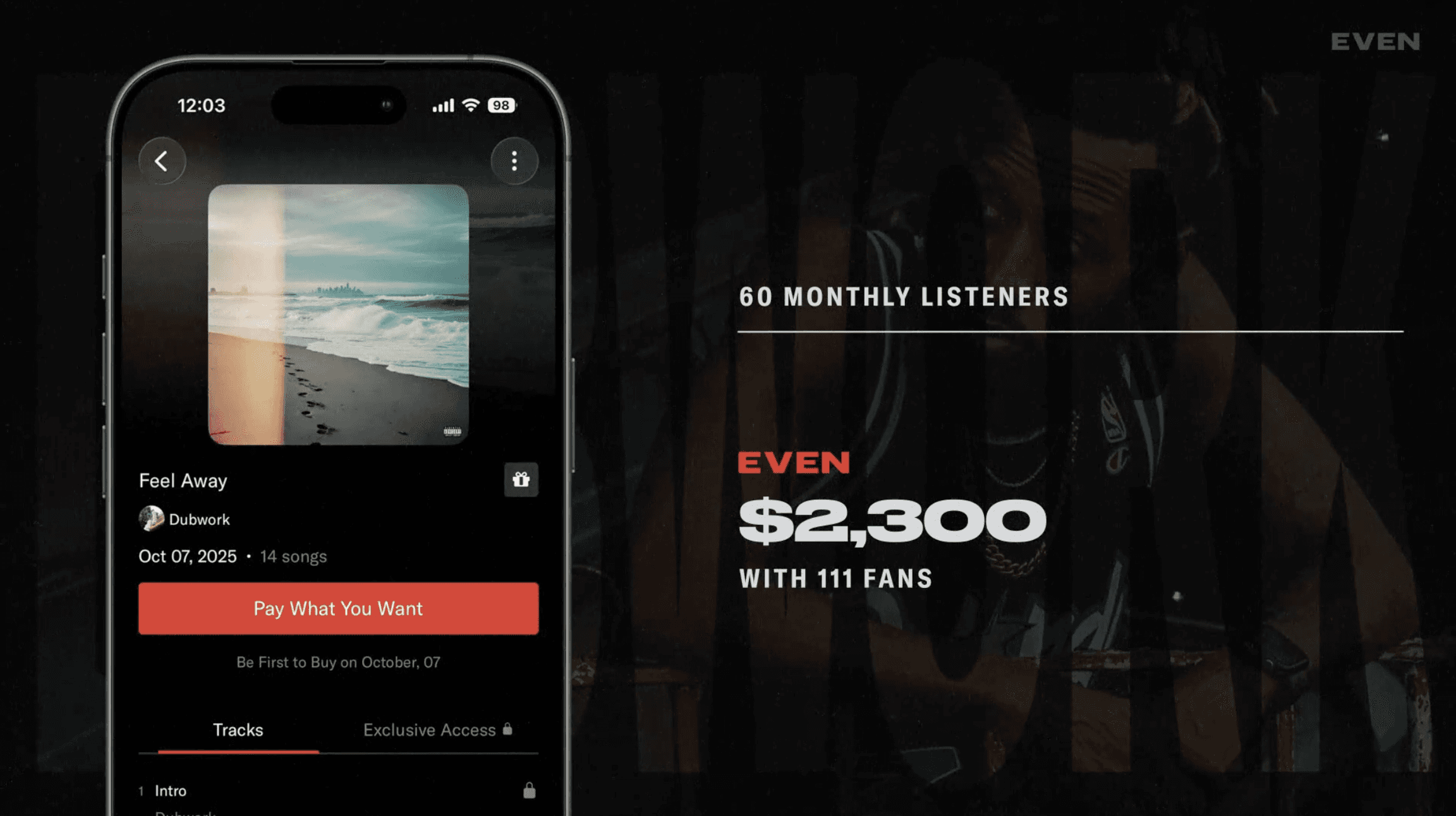
Dubwork is an artist with 60 monthly listeners who made $2,300 with 111 fans. He reached out to his community, offered them content, and even hosted a breath work session for his top spending fans. He made the equivalent of about 700,000 streams with just 111 people.
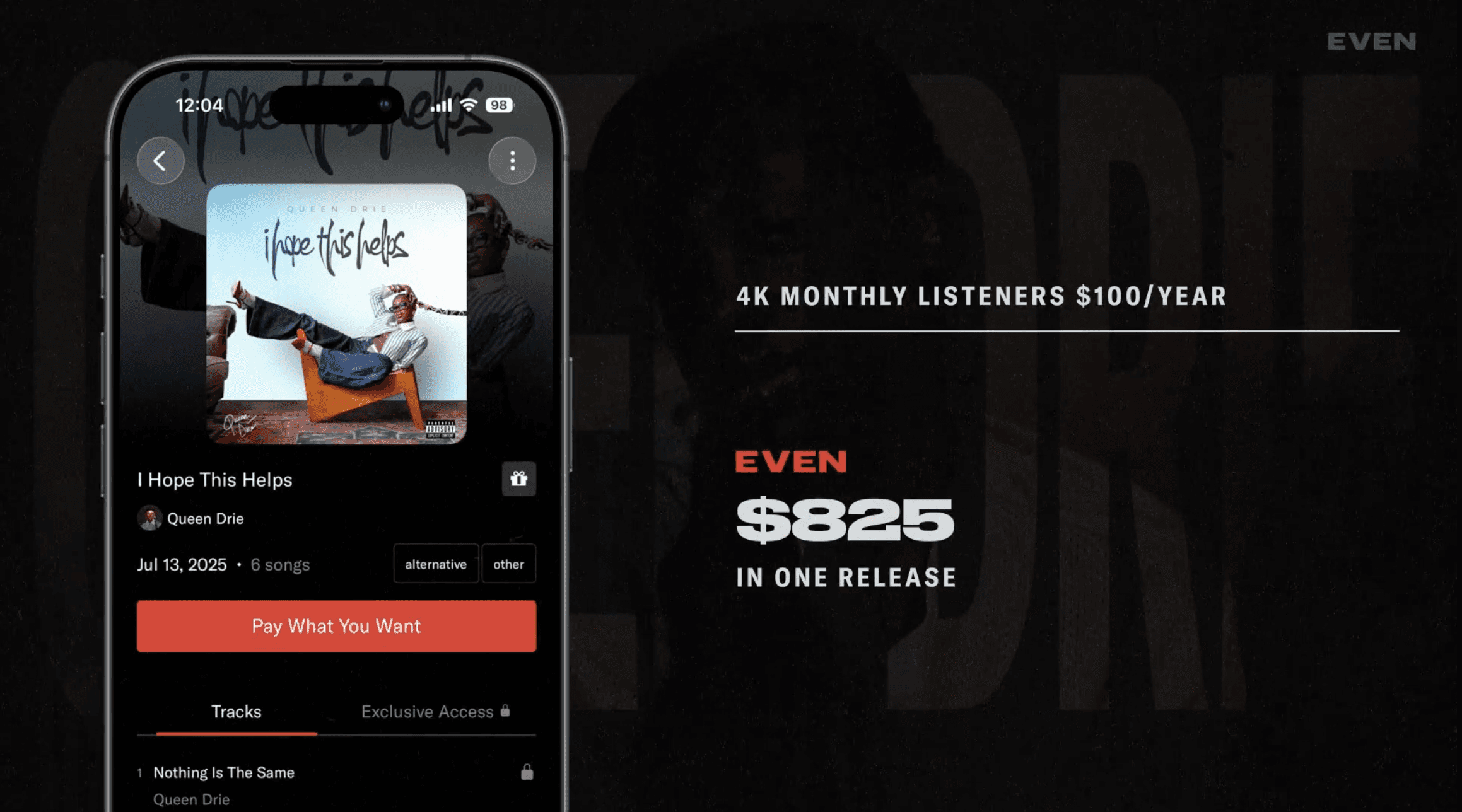
Queen Dre has 4,000 monthly listeners and makes about $100 a year from streaming. On her first release on EVEN, she made $825. That’s the equivalent of almost eight years of streaming from a single release.
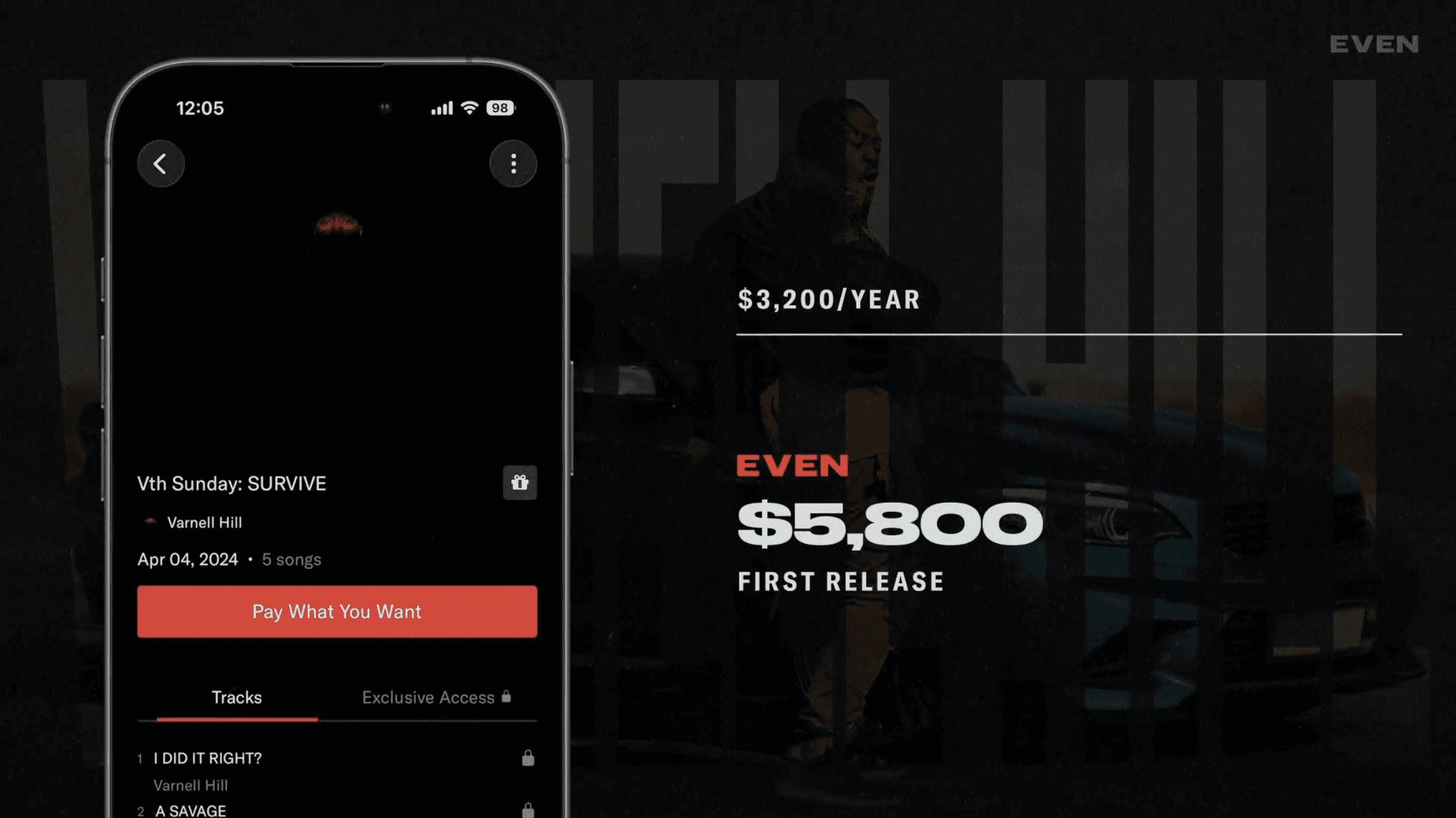
Varnell Hill was actually making decent money from streaming, pulling in $3,200 last year. But on his first release on EVEN, he made $5,800, nearly doubling his annual streaming revenue with one release. He’s since gone on to release three more on the platform.
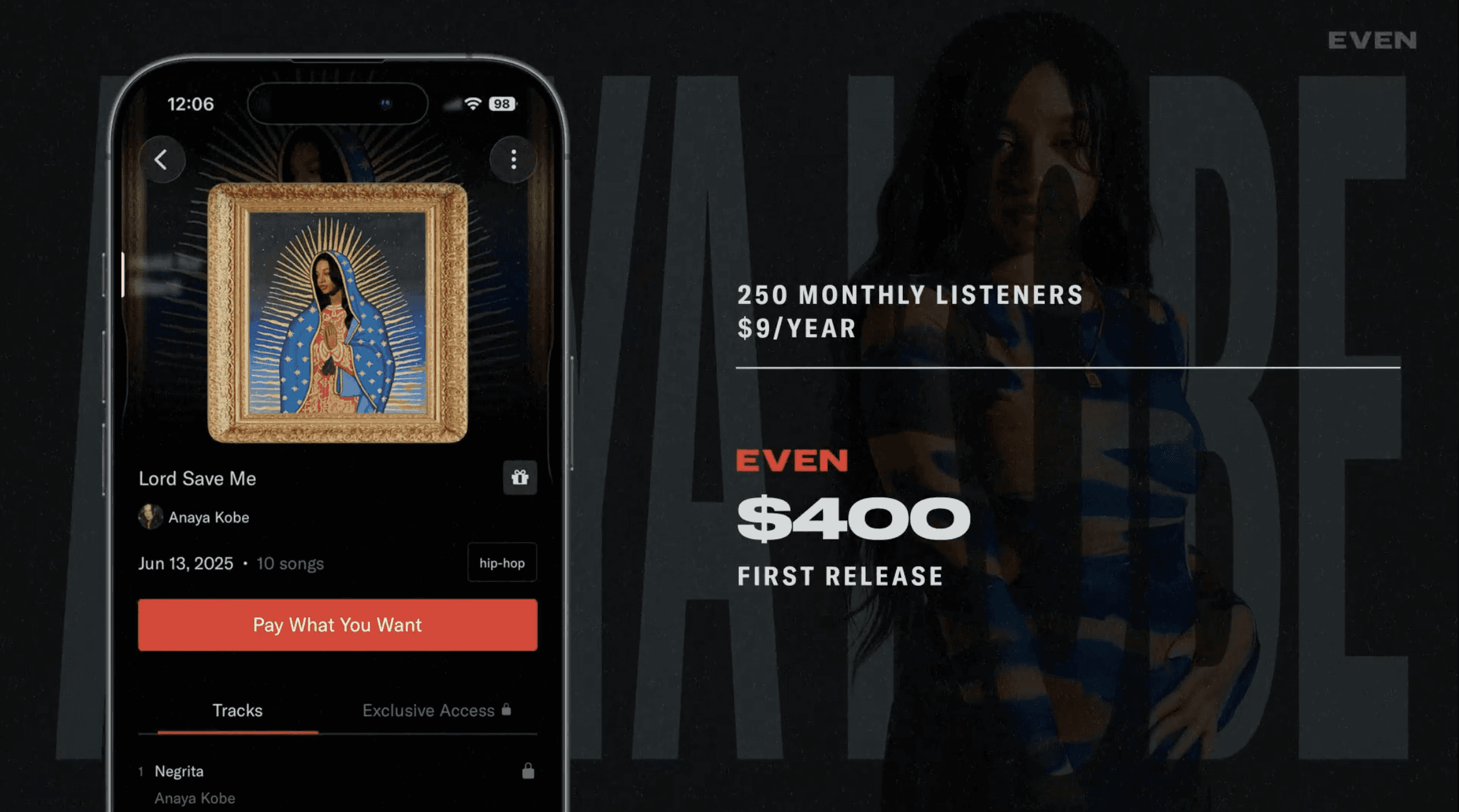
Anaya Kobe has 250 monthly listeners and makes about $9 a year from streaming. On her first album on EVEN, she made $400. It would take about 118,000 streams for her to make that from streaming alone.
The biggest artists are doing this too
This isn’t just for independents. Some of the biggest artists on the planet are using this same strategy.
J. Cole released a 10-episode audio series (about 15 hours of content) that to this day is only available direct-to-consumer. He then re-released an album with bonus tracks only available direct-to-consumer, and it reached number 15 on the Billboard 200.
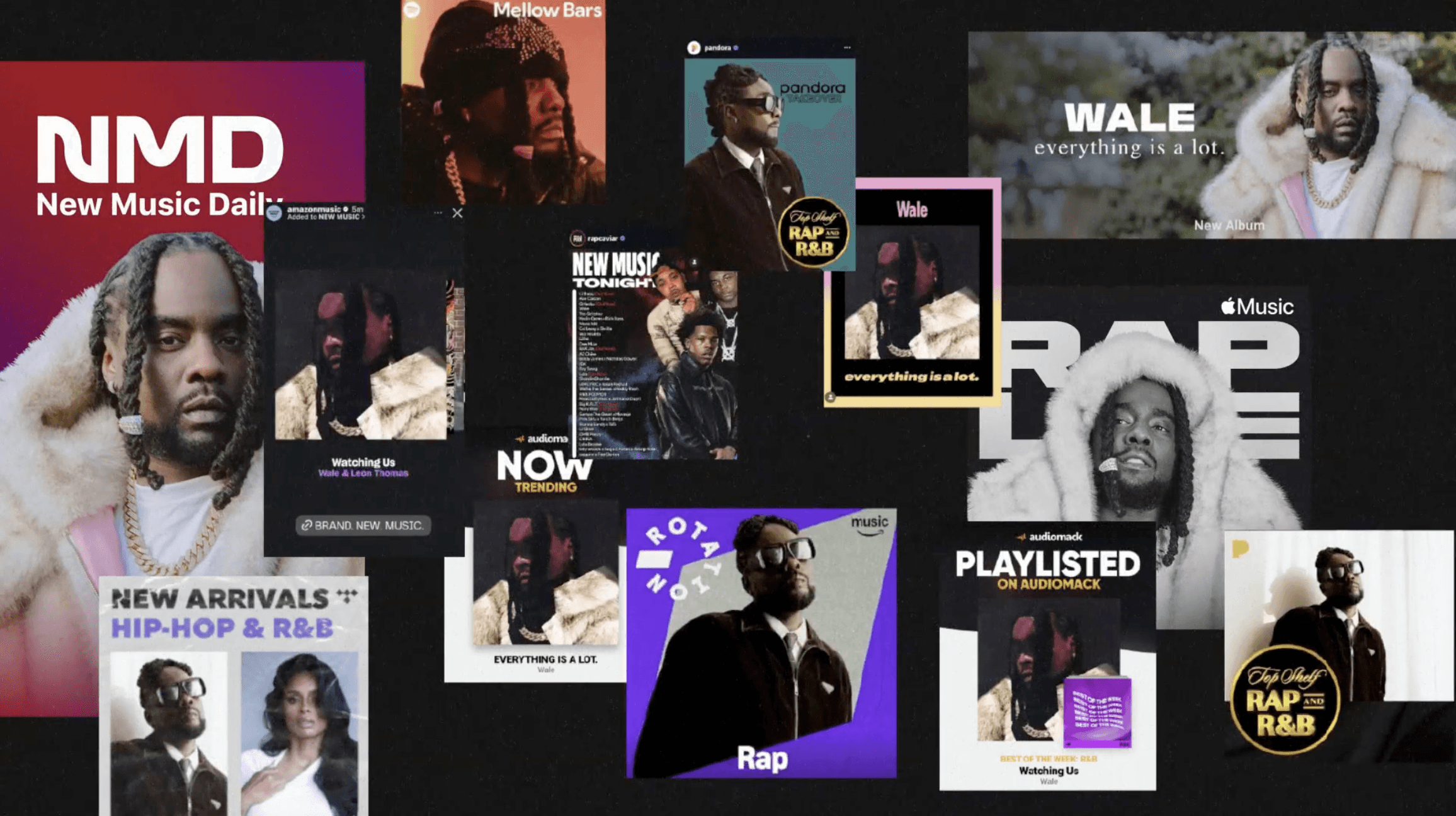
Wale released everything is a lot. as a direct-to-consumer pre-order. When fans pre-ordered, they got to listen to 50% of the album early before it was available anywhere else. They also got access to a community chat, hours of behind-the-scenes content, and he even gave away a pair of Nike boots he’d collaborated on. The album reached number 19 on the Billboard 200, hit the top of the hip-hop charts on Apple Music and Spotify, and his mailing list grew by 14x.
“Will this hurt my streaming numbers?”
No. It won’t impact your streaming rollout at all. It actually adds fuel to it.
All you have to do is treat them as two separate rollouts. The opportunity with direct-to-consumer is that you can leverage the data when pitching to streaming platforms. “Hey, look, I just sold hundreds or thousands of units before my music was even on streaming platforms.”
This is exactly what the best teams are doing. They’re using that direct-to-consumer data to fuel their streaming campaigns. And we’re seeing artists not only land playlist covers, but also Times Square billboards, out-of-home placements, and editorial features in some of the biggest markets with some of the biggest streaming platforms.
The direct-to-consumer campaign isn’t designed to replace your streaming campaign. It’s designed to amplify it.
How to get started
The model is simple: sell directly to your fans first, then go to streaming platforms.
EVEN is free to use. Upload your release, set your minimum price, and let your fans and community know they can buy your art directly from you.
We work with independent artists. We work with major artists. If you’re curious about how EVEN can work for you, get started at backstage.even.biz.
Search articles…